
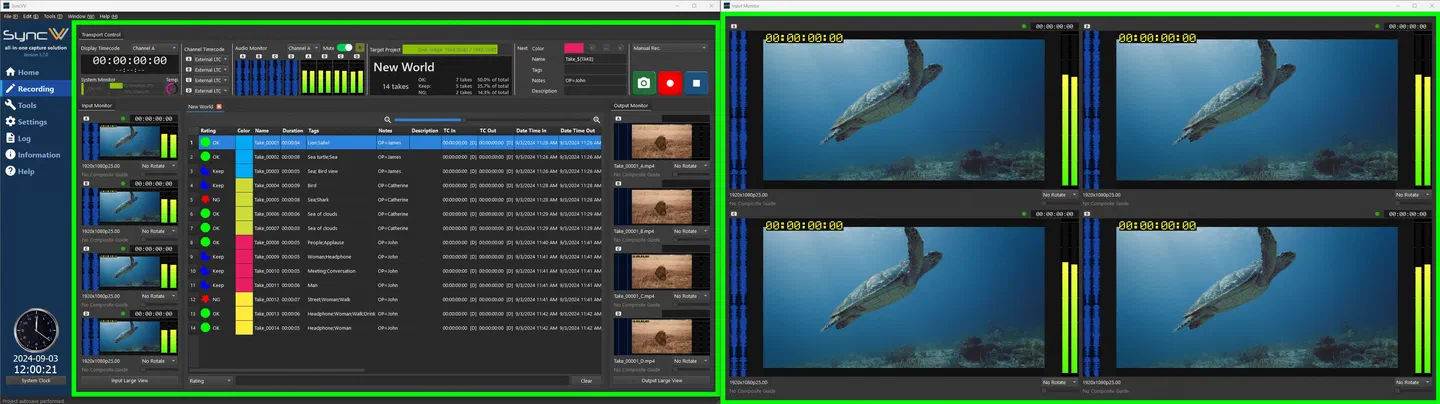
In the studio, a motion capture system tracks the performer’s movements while multiple cameras record the scene from different angles. SyncVV records all of these sources in perfect frame-level sync and connects on-set asset management with handover to post-production in a single workflow.
For years, the burden of synchronized recording was quietly pushed downstream. Once footage reached post-production, editors had to align the frame heads of every clip by hand, asset by asset. A single day of shooting produced an enormous number of takes, and the work of lining them up one by one consumed massive amounts of time and carried a real psychological weight.
SyncVV eliminates this pre-edit work entirely through fully timecode-synchronized recording. From the moment the footage is captured on set, every source is already aligned at the frame level. Post-production teams are freed from alignment work and can focus on editing and creative direction from the start. The reduction in cost and in mental load is something the field feels — and not in small measure.
There was a second, separate challenge on the production side. As shooting progresses, the number of takes balloons. Knowing on the spot whether the last take was good or needed to be redone, and which takes should be passed to post, has to be tracked accurately on-set or chaos appears downstream. Traditionally, this asset management leaned on the memory of skilled operators and informal notes taken on the floor. In the rush of a live shoot, that reliance on personal expertise became a quality risk in itself.
SyncVV’s history begins in 2015 with the original SyncVV from Bluefish Technologies. Built as a hardware-centric product with SDI input at its core, paired with automatic recording linked to Vicon systems, it was widely adopted across the film industry and remained in active use for over ten years.
In 2023, Liberal Logic carried forward the DNA of the original SyncVV and rebuilt the second generation as software. The product concept remained intact, while integration with Vicon Shogun was embedded as a plugin inside the software itself, making on-set operation seamless.
Rewriting a professional synchronized recording system from a hardware-centric design into software required several technical domains to come together at once.
The asset management system was designed from the starting point of how an on-set operator actually decides which take should move on to the next stage. Because our development team handled everything from specification through architecture design, software implementation, and on-site operational design as a single continuous effort, work that used to depend on individual expertise became something anyone on the floor could perform with the same precision.
On set, work that once depended on personal expertise has been replaced by a system that no longer relies on it. What we deliver is recording software. What is being created on the ground, however, is takes that reach post-production cleanly — and the finished works that grow out of them.